Central Kentucky doesn't get the deep, steady freeze that locks pavement in place for months. It gets something worse for asphalt: a winter that keeps changing its mind.
Freeze. Thaw. Freeze again. Your parking lot takes the hit every time.
What Freeze-Thaw Actually Does
Asphalt looks solid, but it isn't sealed. Tiny cracks and pores let water work its way into the surface and the base underneath.
Here's what happens next:
- Water gets into a crack or a weak spot
- Overnight temperatures drop and the water freezes
- Ice takes up more space than water, so it pushes the pavement apart from the inside
- The temperature climbs, the ice melts, and it leaves a bigger gap behind
- The next storm fills that gap, and the cycle repeats
One cycle does very little. A winter full of them does a lot. And in our part of Kentucky, temperatures often swing back and forth across freezing dozens of times between December and March.
Why a Small Crack Becomes a Big Problem
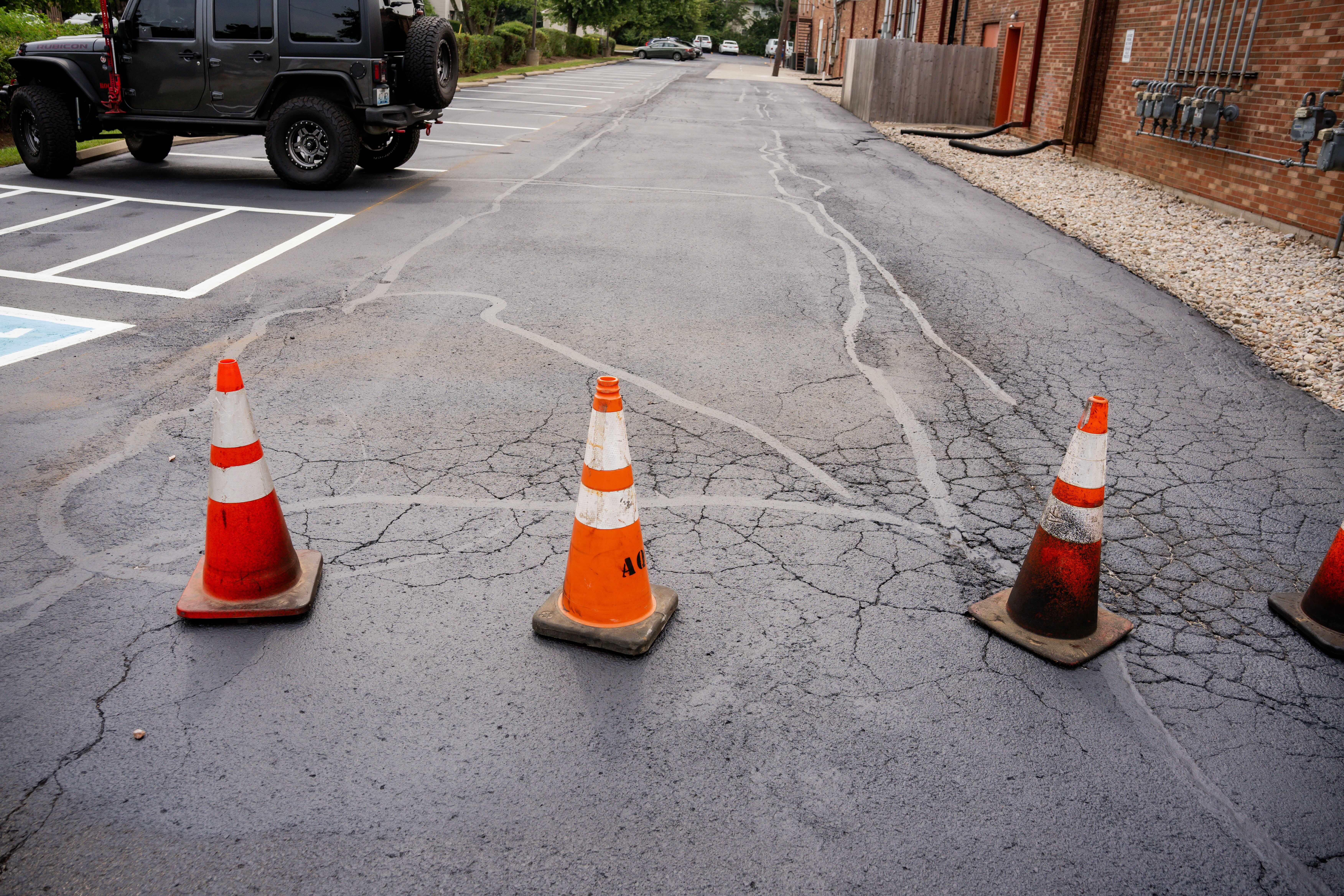
A hairline crack in October can be a pothole by February. Nothing dramatic happened. The same crack just collected water, froze, and widened, again and again.
Traffic makes it worse. Once the pavement around a crack is loosened by ice, cars and delivery trucks break off the weakened edges. That's how a crack turns into a pothole.
Where Winter Damage Shows Up First
Some areas of a lot take the worst of it:
- Existing cracks. Any opening that wasn't sealed before winter is a path for water.
- Low spots and poor drainage areas. Standing water has more time to soak in and freeze.
- Edges and joints. Where asphalt meets concrete, curbs, or utility covers, water finds the seam.
- High-traffic lanes. Loosened pavement breaks apart faster under heavy loads.
- Older, oxidized surfaces. Surfaces that have dried out and gone gray are more porous and less able to shed water.
What You Can Do Before the First Freeze
You can't stop winter. You can limit what it has to work with.
- Seal cracks in the fall. Sealed cracks keep water out. Open cracks let it in.
- Fix drainage problems. If water pools in one spot after rain, winter will make that spot worse.
- Sealcoat aging pavement on schedule. A sealed surface sheds water instead of absorbing it.
- Walk the lot before temperatures drop. Mark what you find so repairs happen while the weather still allows them.
Fall is the practical deadline for this kind of work. Once temperatures stay low, most repair materials can't be installed properly, and you're stuck with whatever winter does until spring.
After Winter Ends
Once the thaw is done, walk the lot again. Look for new cracks, loose material, and any pothole that opened up. Patch the dangerous spots first, then have a professional look at what the damage says about the lot underneath.
A pothole that comes back after patching usually means the problem is deeper than the surface.
The Bottom Line
Freeze-thaw damage isn't a surprise. It happens every year, and it follows the same pattern every time. The lots that come through in good shape aren't lucky. They went into winter with the cracks sealed and the water taken care of.
If you're not sure what shape your lot is in heading into the cold months, APM Paving offers a free assessment so you know what needs attention before winter gets there first.