Most parking lot injuries aren't dramatic. Someone trips on a raised edge, steps in a pothole, or slips on a patch that never drains.
They're also preventable. And when one does happen, the first question is usually what the property owner knew and what they did about it. Here's how to stay on the right side of that question.
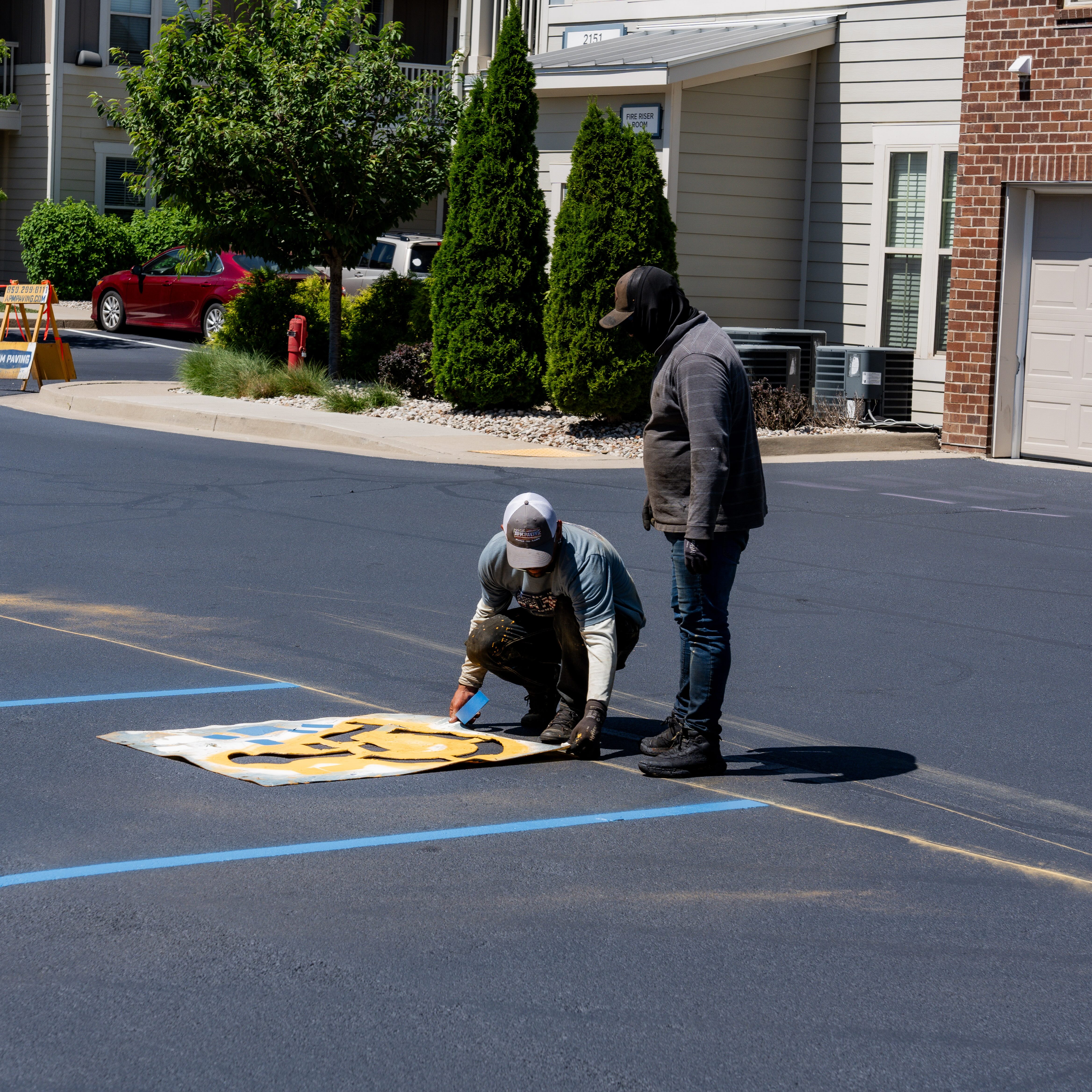
1. Find and Fix Trip Hazards Before Someone Else Does
Pedestrians don't look at the pavement the way a maintenance crew does. They look at their phone, their keys, or the door they're walking toward.
Walk your lot on foot, not from a truck, and look for the things that catch a shoe or a wheel:
- Potholes and broken edges
- Raised or sunken sections, especially around utility covers and drains
- Cracked or lifted curbs and sidewalk transitions
- Wheel stops that are broken, shifted, or sitting at an odd angle
Small hazards are usually small repairs. The ones that sit for a season or two are the ones that end up in an incident report.
2. Keep Striping, Signs, and Visibility Clear
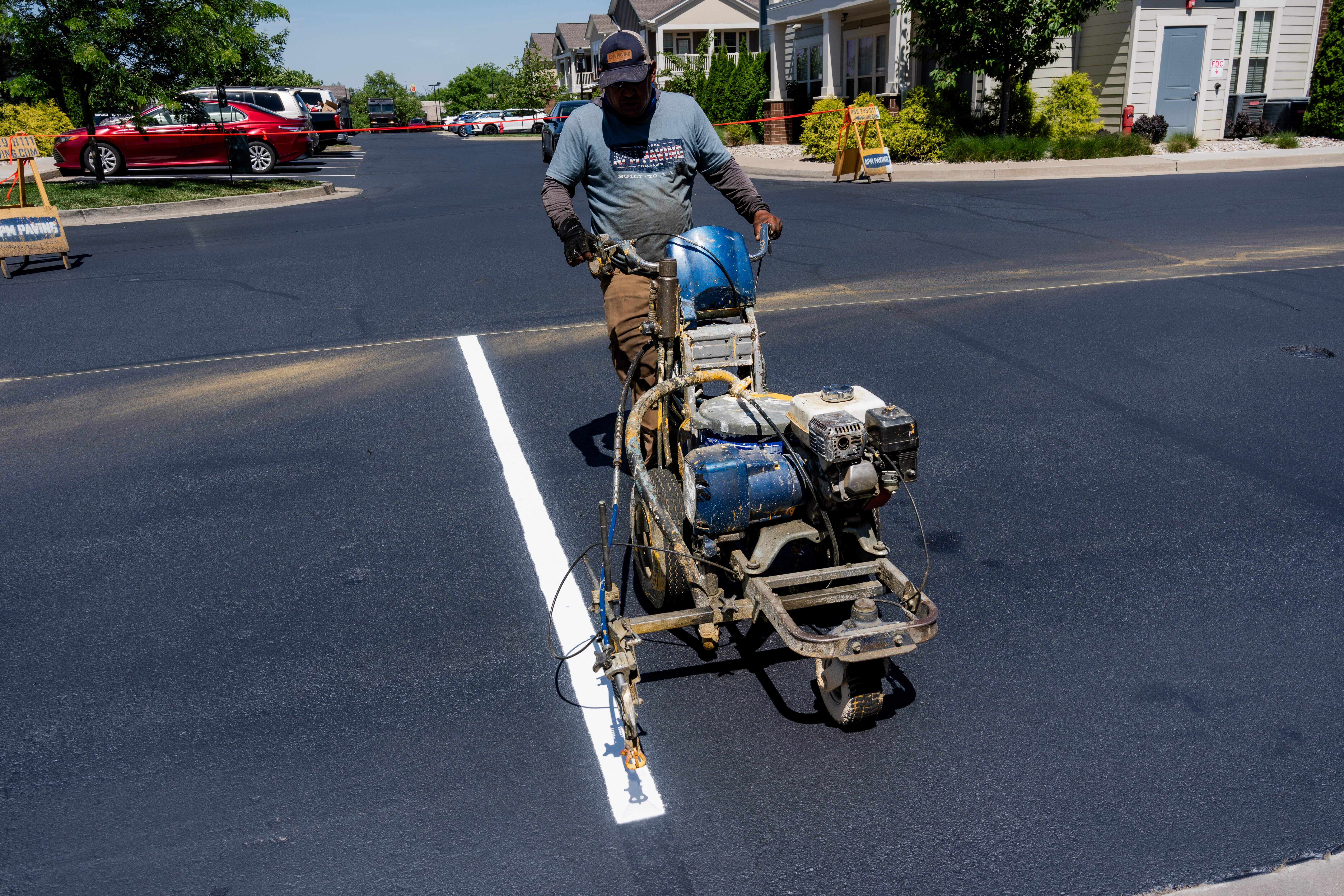
A lot that's easy to read is a lot where people drive and walk more predictably. Faded lines leave drivers guessing where lanes, stalls, and crosswalks begin and end.
Check that the following are clearly visible, day and night:
- Crosswalks and pedestrian paths
- Accessible parking stalls and access aisles
- Fire lanes, stop bars, and directional arrows
- Signs and bollards that are bent, leaning, or blocked by landscaping
Lighting matters here too. A well-marked lot that's too dark to see at night still leaves people guessing.

3. Document Your Maintenance
Doing the work is the first step. Being able to show you did it is the second.
Keep a simple record of when the lot was inspected, what was found, and what was repaired and when. That can be as basic as dated notes and photos alongside the invoices from your contractor. It also turns pavement care from something you do when you remember into something that follows a schedule. If a question ever comes up, a clear history of regular inspection and prompt repairs is far better than having to reconstruct it from memory.
The Bottom Line
A safer lot comes down to three habits: fix hazards while they're still small, keep markings and signage easy to see, and keep a record of what you've done. None of it is complicated. It just has to happen on a schedule instead of after something goes wrong.
For specific legal questions about your property, talk with your attorney or insurance provider. For the pavement side, APM Paving offers a free assessment. We'll walk your lot with you and point out what needs attention.