Most commercial properties can close their parking lot for a day.
Apartment communities can't.
Residents live there. They come and go at all hours, park in the same spots every night, and rely on that pavement to get their kids to the bus stop and their groceries to the door. That single difference changes almost everything about how pavement maintenance should be planned for multifamily properties.
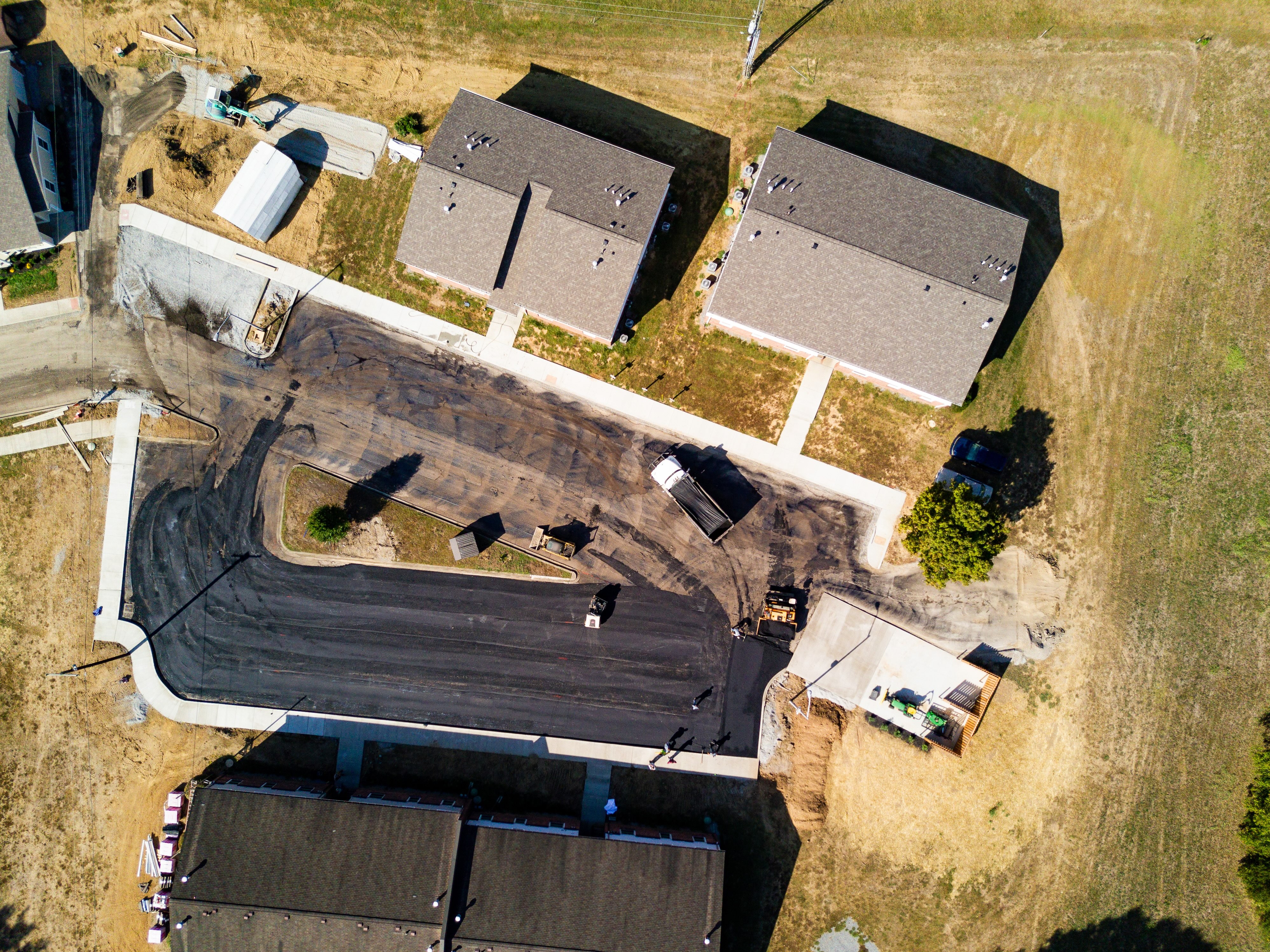
Why Pavement Matters More Here
For most commercial properties, pavement condition affects convenience. For apartment communities, it affects something bigger: how residents feel about where they live, and whether prospective renters decide to sign a lease.
A cracked, potholed lot is one of the first things a prospective tenant notices during a tour, often before they've seen a single unit. It signals how well the property is maintained overall, fairly or not.
There's also a liability dimension that's more pronounced here than almost anywhere else. Residents walk these lots daily, often in the dark, often with kids, often carrying groceries or hauling belongings during move-in and move-out. Trip hazards and potholes aren't just a maintenance inconvenience. They're a safety and liability issue that plays out every single day, not just during business hours.
The Apartment Challenge: You Can't Just Close the Lot
This is the single biggest difference between planning a paving project for an apartment community versus almost any other commercial property.
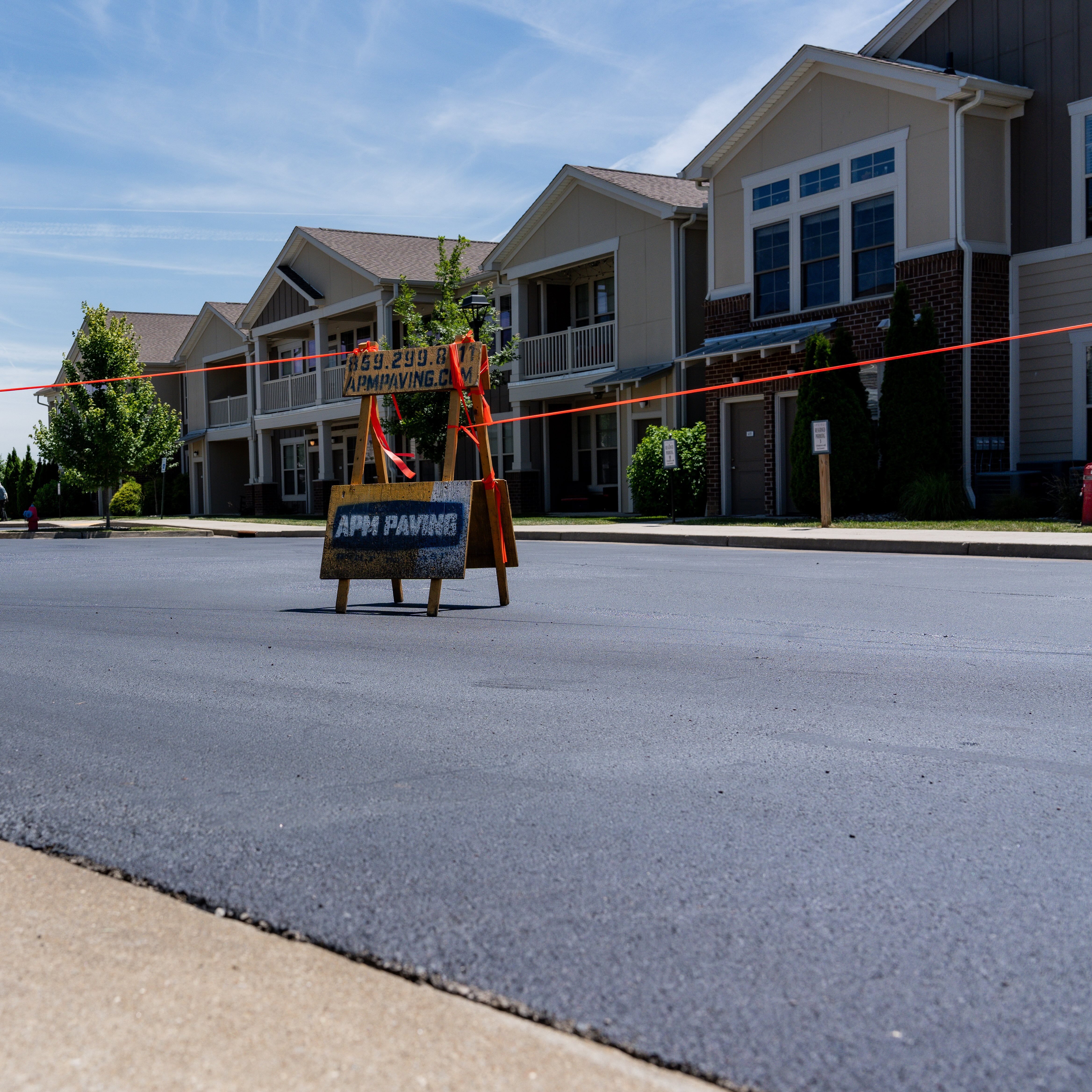
A retail center can schedule work overnight. An office building can close a section of its lot during business hours. An apartment community has residents living on-site around the clock, which means every project has to work around real people's daily lives, not just business hours.
That requires a different kind of planning:
- Phased scheduling. Breaking large lots into sections so residents always have access to parking near their building.
- Advance resident communication. Notices, timelines, and alternate parking instructions that need to go out well before crews arrive.
- Access for emergency and service vehicles. Fire lanes, trash pickup, and delivery routes can't be blocked, even temporarily.
- Move-in/move-out timing. Scheduling around your property's highest-traffic days whenever possible.
None of this is complicated, but it does require a contractor who has actually managed occupied properties before, not just empty commercial lots.
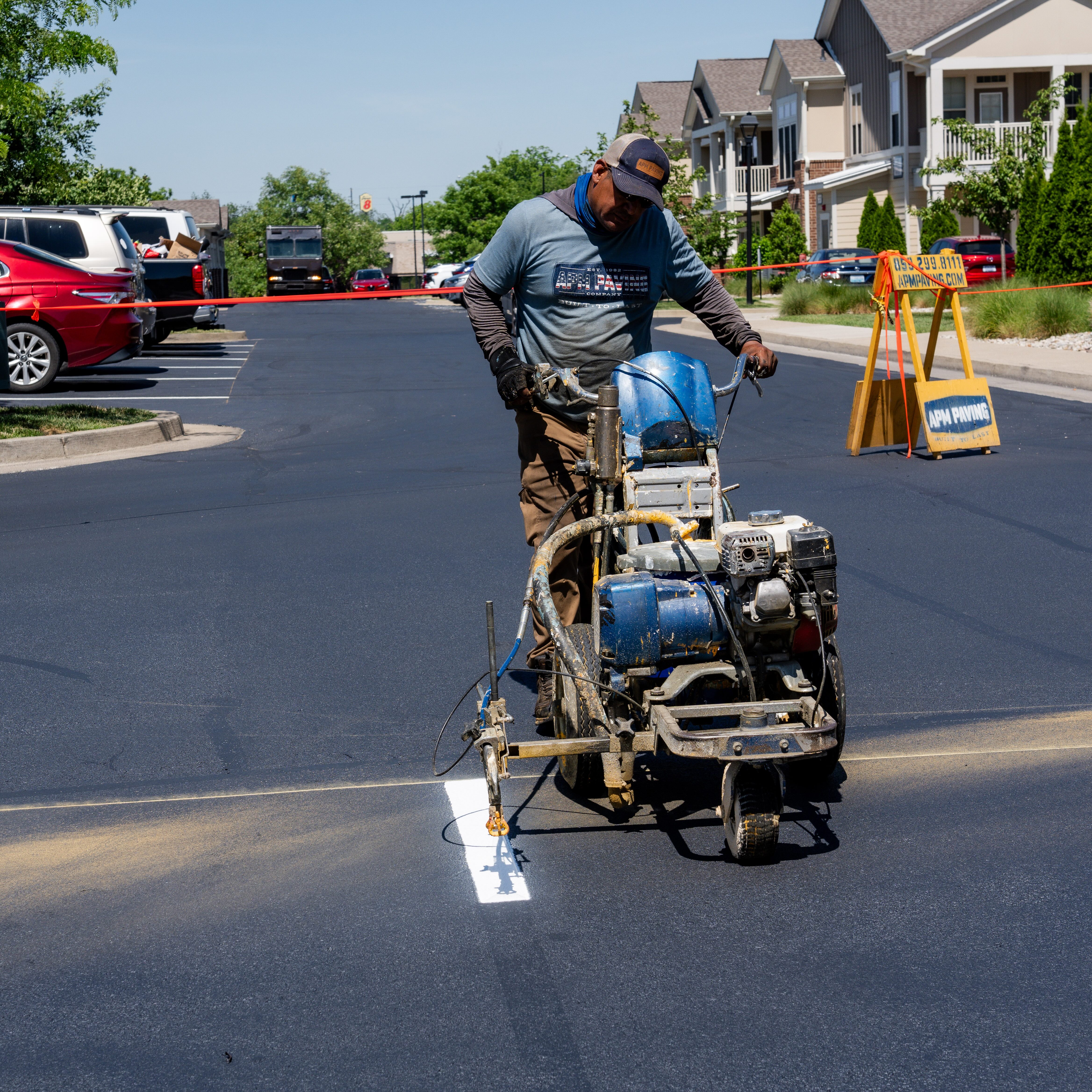
Common Problem Areas at Apartment Communities
Certain areas of an apartment property tend to wear out faster than the rest of the lot, simply because of how they're used:
- Dumpster pads. Constant weight from trucks and daily foot traffic makes these some of the first areas to crack or settle.
- Drive lanes and fire lanes. High-frequency traffic patterns concentrate wear in the same tire paths, accelerating rutting and cracking.
- Guest and overflow parking. Often installed to a lower standard originally, these areas frequently need attention sooner than primary resident parking.
- Speed bumps and striped crosswalks. High-wear areas that also carry safety implications when they fade or degrade.
Knowing which areas wear fastest helps prioritize a maintenance budget instead of treating the entire lot as one uniform project.
Building a Realistic Maintenance Plan
Apartment communities benefit from thinking about pavement the same way they think about roofs, HVAC systems, or unit turnovers: as a planned, budgeted asset, not a reactive expense.
A few principles that tend to work well:
- Align paving work with your reserve fund cycle, not just whenever damage becomes visible.
- Prioritize by safety and liability first, then curb appeal, then everything else.
- Address small problems early. Crack sealing and minor patching cost a fraction of what full-depth repairs or replacement cost later.
- Plan projects in phases across multiple buildings or lots rather than attempting an entire property at once.
This isn't about spending more. It's about spending at the right time, on the right areas, so residents barely notice the work happening and the budget doesn't get blindsided by an emergency repair.
The Bottom Line
Pavement at an apartment community isn't just infrastructure. It's part of the daily experience residents have with where they live, and it's one of the first things prospective tenants judge the property by.
Planning around full occupancy takes more coordination than a typical commercial project, but it's entirely manageable with the right approach and the right contractor.
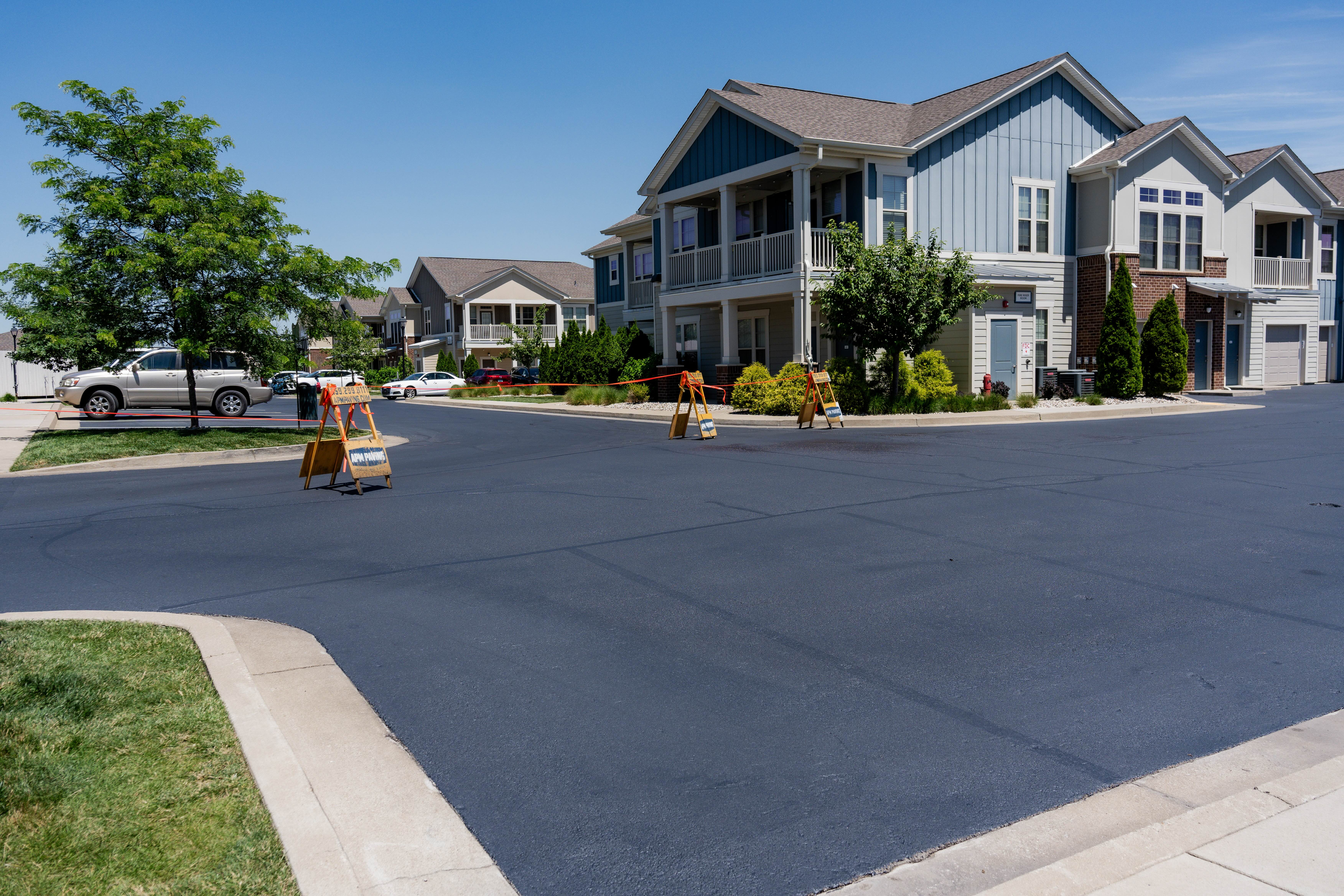
A Quick Takeaway
Walk your property the way a prospective resident would. What would they notice first?